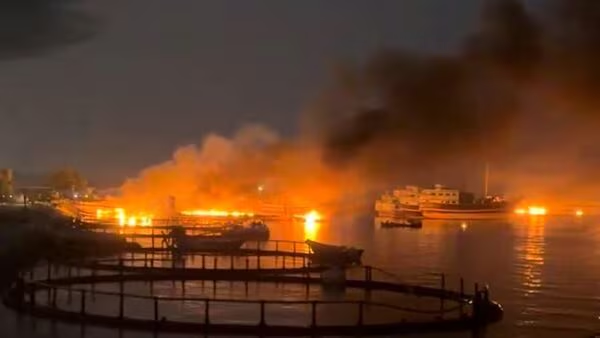
The military confrontation between the United States and Iran continues to escalate after another night of American airstrikes targeted infrastructure across southern Iran. According to Iran's Health Ministry, at least 50 people have been killed and more than 500 injured since US military operations began on July 6, making it one of the deadliest phases of the conflict so far.
Iranian authorities reported that overnight strikes damaged critical civilian infrastructure, including water and telecommunications networks. The country's national water company said nearly 10,000 residents across 20 villages in southern Iran were left without water following the attacks.
Telecommunications and Infrastructure Hit
Officials in Hormozgan Province reported that 116 telecommunications towers were taken out of service, causing widespread disruptions to mobile, internet, and fixed-line communications in Bandar Abbas, Hajiabad, and surrounding areas.
Provincial officials in Khuzestan also claimed that US forces had struck 95 separate locations over the past ten days across multiple counties, with several civilian casualties reported.
Iran Declares MoU Suspended
In a significant diplomatic development, Iranian Deputy Foreign Minister Kazem Gharibabadi announced that Tehran has suspended all commitments under the Islamabad Memorandum of Understanding (MoU), accusing Washington of violating every major provision of the agreement through continued military operations.
The announcement marks the first official declaration from Iran that the agreement is effectively no longer being implemented, further reducing prospects for near-term diplomatic engagement.
Satellite Images Show Damage at Bushehr
New satellite imagery released by independent analysts indicates fresh damage inside the Bushehr nuclear power plant complex, Iran's only operational civilian nuclear facility. While there are no confirmed reports of damage to nuclear reactors, the images show new impact sites within the broader complex and nearby support infrastructure.
The findings highlight the increasing risks associated with military operations near sensitive nuclear installations.
Regional Tensions Continue to Rise
Security concerns are spreading beyond Iran.
Bahrain activated air raid sirens multiple times as a precaution, while Lebanon reported the death of a soldier following an explosion involving a military vehicle in the country's south. Regional governments remain on high alert as fears grow that the conflict could expand beyond its current borders.
International Concern Over Diplomatic Breakdown
Political analysts warn that the collapse of the MoU and the continued absence of an effective international mediation effort have significantly increased the risk of a prolonged conflict.
Experts argue that without meaningful diplomatic intervention, both Washington and Tehran face mounting pressure to manage an increasingly volatile military confrontation, raising concerns over regional stability, energy security, and global economic repercussions.
As military operations continue and diplomatic channels weaken, international attention remains focused on whether renewed negotiations can prevent the conflict from escalating into a wider regional war.